Complete Ranking of the Top 10 Fastest Developing Cities in India
August 18, 2026 in
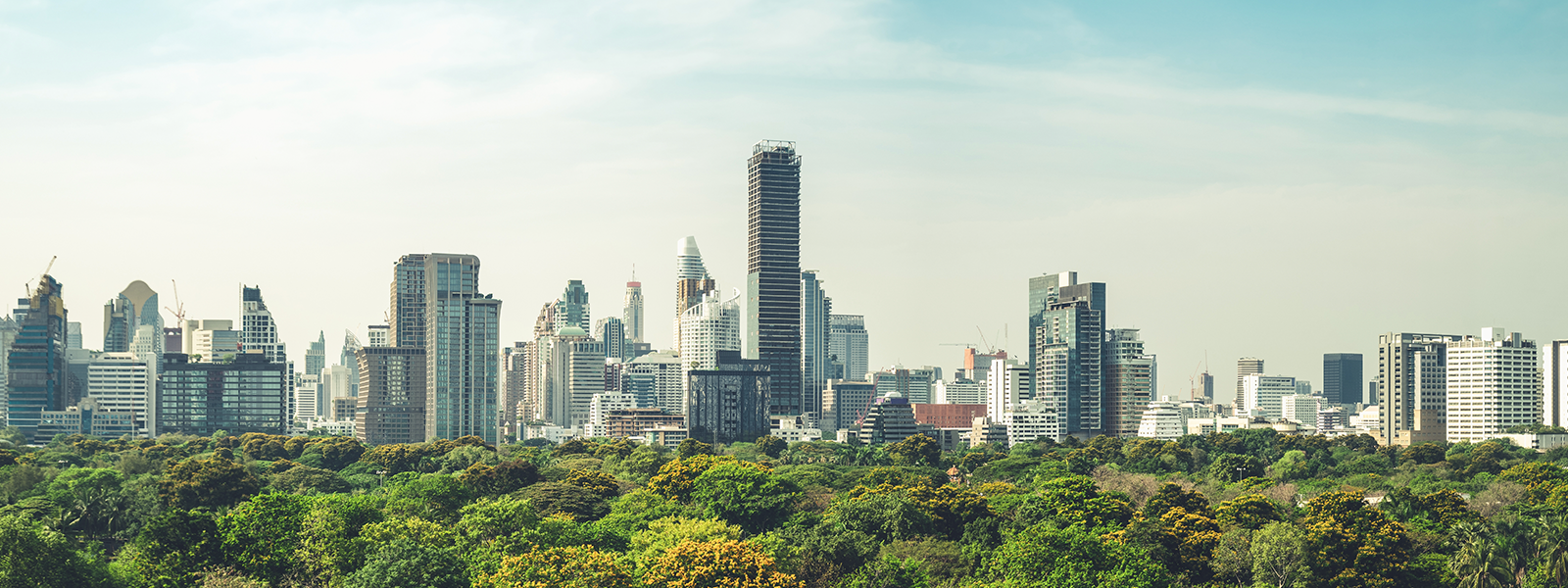
India's urban landscape is changing rapidly as economic activity spreads beyond traditional metropolitan centres. Technology, manufacturing, infrastructure, logistics, and services are creating new growth corridors across the country. Some cities are strengthening established industries, while others are building entirely new business ecosystems.
This makes identifying the fastest-growing city in India more complex than comparing population figures alone. Development also depends on employment, connectivity, investment, infrastructure, and future economic capacity. There is no single official national ranking for the fastest-developing city, so broader indicators offer a more useful comparison.
Let's look at the cities currently showing some of India's strongest development momentum and understand what is driving their progress.
What Makes a City One of India's Fastest Developing Cities?
A developing city needs more than increasing population or construction activity. Sustainable urban progress usually involves several economic and infrastructure indicators working together. The fastest-developing cities of India can therefore be assessed through factors such as:
- Economic Activity: Expansion across technology, manufacturing, trade, services, and other industries.
- Employment Opportunities: Growth in skilled, professional, industrial, and service-sector jobs.
- Infrastructure: Development of metros, airports, roads, industrial corridors, and public transport.
- Investment: New offices, factories, commercial districts, technology parks, and industrial clusters.
- Industry Diversity: Presence of multiple sectors that support a broader economic base.
- Future Development: Planned infrastructure and investment capable of supporting continued expansion.
These factors help explain why two cities with similar population growth may have very different development trajectories.
Top 10 Fastest Developing Cities in India
There is no universally accepted top 10 fastest developing city in India ranking because different studies use different parameters. However, these ten cities stand out for their combination of economic expansion, infrastructure investment, employment, and industry growth.
1. Bengaluru, Karnataka
Bengaluru continues to lead India's technology-driven growth. In Q1 2026, the city recorded 4.9 million sq ft of net office absorption, 52% higher year-on-year. It also accounted for 36% of India's Q1 net office absorption, the highest among major Indian cities.
Key development hubs include Whitefield, Outer Ring Road, Electronic City, Manyata Tech Park and Bengaluru Aerospace Park. The city's technology ecosystem is also expanding into AI, engineering and advanced research. In H1 2026, Bengaluru's warehouse leasing grew 78% year-on-year, the fastest growth among India's top eight logistics markets.
2. Hyderabad, Telangana
Hyderabad recorded 5.86 million sq ft of office leasing in Q1 2026, representing a 48% year-on-year increase. GCCs accounted for approximately 43% of the quarter's leasing, highlighting the city's growing role as a corporate technology hub.
The city's main development clusters include HITEC City, Madhapur, Gachibowli and the Financial District. In August 2026, JLL also opened a 120,000 sq ft GCC in the Financial District, with plans to scale the centre to 1,600 employees.
3. Pune, Maharashtra
Pune remains a major technology and industrial growth centre. In Q1 2026, Pune recorded office leasing of around 2–3 million sq ft, with office uptake more than doubling year-on-year, according to Colliers.
Development is concentrated around Hinjewadi IT Park, Kharadi, Pimpri-Chinchwad, Chakan, Talegaon and Ranjangaon. These areas support Pune's IT, automobile, engineering, electronics and manufacturing ecosystems.
The city's growth is also supported by its expanding industrial and logistics network, linking the IT corridors with major manufacturing clusters.
4. Greater Noida, Uttar Pradesh
Greater Noida is gaining importance as an electronics and semiconductor manufacturing hub. In February 2026, the foundation stone was laid for the ₹3,700-crore HCL-Foxconn semiconductor facility near Jewar. The facility is expected to become operational by 2028 and will manufacture display driver chips.
The Yamuna Expressway Industrial Development Authority (YEIDA) region is becoming a major growth corridor, supported by Noida International Airport, the Yamuna Expressway, logistics parks, data centres and the proposed International Film City.
5. Chennai, Tamil Nadu
Chennai's office and industrial ecosystem continues to expand. The city is expected to cross 100 million sq ft of office stock by the end of 2026, up from more than 89 million sq ft.
Its major development hubs include OMR, Taramani, Guindy, Sriperumbudur and Oragadam. The wider Chennai region is also attracting fresh manufacturing investment. In August 2026, Tamil Nadu announced ₹67,452 crore across 97 investment agreements, with projects expected to create more than 100,000 jobs.
The investments span electronics, EVs, manufacturing, space technology and life sciences, strengthening Chennai's position as a diversified industrial centre.
6. Ahmedabad, Gujarat
Ahmedabad's growth is closely connected with the wider Ahmedabad-Gandhinagar-GIFT City corridor. GIFT City currently has more than 1,000 operational entities, over 29 million sq ft allotted and more than 20,000 jobs, while banking assets have crossed US$100 billion.
Other major development hubs include Sanand Industrial Estate, Ahmedabad-Gandhinagar corridor and Dholera-linked industrial infrastructure. Gujarat's Industrial Policy 2026 is also targeting investment, manufacturing, innovation, employment and industrial-township development.
7. Surat, Gujarat
Surat continues to develop around its established textile, diamond and manufacturing base. The city's growth is receiving additional policy support in 2026, with Gujarat increasing its Development of Textile Industry scheme allocation to ₹2,755 crore for FY2026-27, up from ₹2,000 crore previously.
Major development hubs include Surat Diamond Bourse, Sachin GIDC, Pandesara GIDC, Hazira Industrial Area and the city's textile clusters. The 2026 Vibrant Gujarat Regional Conference also focused on strengthening South Gujarat's textile ecosystem through investment, innovation and global market integration.
8. Gurugram, Haryana
Gurugram's office market crossed 100 million sq ft in 2026, making it the largest office market in North India. The milestone reflects sustained demand from multinational companies, GCCs and large corporate occupiers.
The city's major commercial hubs include Cyber City, Golf Course Road, Golf Course Extension Road, Udyog Vihar and Sohna Road. Its proximity to Indira Gandhi International Airport, Delhi and major expressways further supports its role as an NCR business centre.
9. Indore, Madhya Pradesh
Indore is strengthening its position as a central Indian industrial and logistics hub. In June 2026, MPIDC allotted 27.35 hectares in Pithampur Sector-7 to seven industrial units, representing proposed investments of ₹1,911 crore and expected employment of around 1,797 people.
The Indore-Pithampur Economic Corridor, for which foundation work began in May 2026, is expected to attract substantial industrial investment and strengthen connectivity between Indore and the Pithampur manufacturing region.
10. Lucknow, Uttar Pradesh
Lucknow is expanding its economic base through defence manufacturing, technology and infrastructure. The city's BrahMos Integration and Testing Facility Centre spans 200 acres and represents an investment of ₹380 crore. The facility is designed to produce approximately 100 missile systems annually and is expected to support substantial industrial activity.
The city's key development hubs include the UP Defence Industrial Corridor's Lucknow node, Gomti Nagar, Lucknow IT City, Amausi and Lucknow Airport. The defence corridor connects Lucknow with other major nodes across Uttar Pradesh, including Kanpur, Agra, Aligarh, Chitrakoot and Jhansi.
Looking Ahead at India's Fastest Developing Cities
India's urban growth is being shaped by cities with very different strengths, from technology and manufacturing to infrastructure, services, and trade. While the ranking highlights cities showing strong development momentum, there is no single city that suits every purpose or priority.
The fastest-developing cities of India should therefore be compared based on career opportunities, connectivity, affordability, industry presence, and future infrastructure plans. As investment continues to spread beyond established metros, more Tier 2 and emerging cities are likely to gain prominence.
Ultimately, the right city is one that combines current opportunities with the potential to support your long-term goals.
Frequently Asked Questions (FAQs)
1. Which Indian cities are attracting the most new businesses in 2026?
Ans: Bengaluru, Hyderabad, Chennai, Pune and Gurugram continue to attract businesses across technology, GCCs, manufacturing, finance and professional services. Emerging hubs such as Greater Noida and Indore are also gaining attention for industrial and logistics investments.
2. Which cities are becoming major GCC hubs in India?
Ans: Bengaluru, Hyderabad, Pune, Chennai and Gurugram are among India's prominent GCC destinations. Their established talent pools, commercial infrastructure, technology ecosystems and connectivity make them suitable for large global operations.
3. Which developing cities in India offer strong industrial opportunities?
Ans: Chennai, Pune, Greater Noida, Surat, Ahmedabad and Indore have strong industrial ecosystems. Their manufacturing clusters support sectors such as automobiles, electronics, textiles, pharmaceuticals, engineering and advanced manufacturing.
4. Which infrastructure projects could influence India's urban growth?
Ans: Major projects such as Noida International Airport, industrial corridors, metro expansions, expressways, economic corridors and airport-linked developments are expected to influence future growth. Their impact will depend on project completion, connectivity and the development of surrounding commercial areas.
5. Are Tier 2 cities becoming important alternatives to India's major metros?
Ans: Yes. Cities such as Indore and Lucknow are developing specialised industrial, defence, logistics and technology ecosystems. Lower operating costs and new infrastructure can make such cities attractive for businesses seeking expansion beyond established metropolitan markets.
Properties in Pune
Pune, a city that is historically rich as well as highly progressive in the current times, is amassing unprecedented development infrastructurally. The real estate chapters of Pune have some of the best realtors etching their names with their magnificent developmental projects both in the residential and commercial sectors.

Looking for dream spaces, not sure where to start?
Leave us a query and our representative will get back to you.
Disclaimer
The Adani Realty expressly disclaims all liability in respect to actions taken or not taken based on any or all the contents of this Blog. The content of this blog is collation of data from various sources and is provided only for information purpose only and Adani Realty does not canvass the particulars, information, brand or any other materials mentioned in the blogs nor does it obtain any monetary benefit from the same.The Adani Realty shall in no circumstance be held liable for any expense, loss or damage including, without limitation, direct, indirect or consequential loss or damage, or any other expense, loss or damage whatsoever arising from the use of data, information, interpretation, judgement or opinion arising out of or in connection with the use of this Blog. Reader is advised to read and apply his/ her intellect and discretion in this regards.